- Reflection to the
article “The Meanings of a Word” by Gloria Naylor
“The Meanings
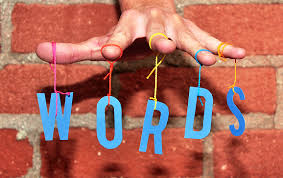
of a Word” is an outstanding title according to me because words have always been
an object of curiosity. Have you ever thought how and when the words came up,
who invented or produced them? Why does a word means something but not
something else? Or, are the both possible?
 Gloria Naylor
starts her essay by comparing the written word and the spoken word. She says language
in written form is what makes her sanity keep in a good situation while she
writes in her diaries. I could not agree her more on this statement because I
keep a diary too and I think it really helps me in terms of gaining a loyal and
understanding friend. When I write, I feel my brain works fast and I want to
make it work even faster. I cannot hold my thoughts and I just throw them on
the pages of my diary so that I can breathe and relax. Thus, sharing such an
interest with the writer was my biggest motive to read her essay. However, her
essay is not about diaries, written language or written words because she
thinks spoken word is superior to written word. Even though she likes writing
much, she accepts the fact that writing can never display the whole ideas in
our minds as dialogs in spoken language can do. Spoken forms of communication
are somehow more alive and vivid, so they are better at conveying the message
and reality of words. She later adds that the meanings and reality of words
come from the consensus, which means people and different cases are the shapers
of everything about a word. The example she uses in her essay is the word nigger. Today it is known that this word
should not be used to call black people. It is known to be a humiliating word. Nevertheless,
Naylor does not think so and claims that nigger
can actually be used positively in some contexts. She tells a story before
defining the other meanings of the word “nigger”. It is a story from her
childhood when one of her friends said to her that she was a nigger as she
received a higher mark than her friend, which made him get angry and rude. At that
time, she knew that the boy wanted to upset her, so she understood that “nigger”
was a bad word although she did not know its meaning. After she told that event
to her mother, she learned and remembered the other usages of that word. Thanks
to this essay, I also learned these usages that do not have any bad or
insulting meanings at all. For example, according to her black acquaintances
and as well as she remember their conversations, if a woman calls her husband
as “my nigger”, it is okay because she use this term to show her love and
respect in addition to emphasize the manhood of her husband. There is also
another term: trifling niggers. Trifling niggers are only used when somebody
wants to neglect people who have bad habits, but this indifference in this context
is not because of hate or scorning. It is just like parents’ attitude when they
want to teach a lesson to their children by keeping silent. Hence, Naylor
believes that words themselves are nothing. They do not have a specific meaning
or they do not exist on their own. What make them meaningful and dynamic are
people, memoirs and the way we insert messages into them. I think she is totally
right in her thesis because it makes sense to me.
Gloria Naylor
starts her essay by comparing the written word and the spoken word. She says language
in written form is what makes her sanity keep in a good situation while she
writes in her diaries. I could not agree her more on this statement because I
keep a diary too and I think it really helps me in terms of gaining a loyal and
understanding friend. When I write, I feel my brain works fast and I want to
make it work even faster. I cannot hold my thoughts and I just throw them on
the pages of my diary so that I can breathe and relax. Thus, sharing such an
interest with the writer was my biggest motive to read her essay. However, her
essay is not about diaries, written language or written words because she
thinks spoken word is superior to written word. Even though she likes writing
much, she accepts the fact that writing can never display the whole ideas in
our minds as dialogs in spoken language can do. Spoken forms of communication
are somehow more alive and vivid, so they are better at conveying the message
and reality of words. She later adds that the meanings and reality of words
come from the consensus, which means people and different cases are the shapers
of everything about a word. The example she uses in her essay is the word nigger. Today it is known that this word
should not be used to call black people. It is known to be a humiliating word. Nevertheless,
Naylor does not think so and claims that nigger
can actually be used positively in some contexts. She tells a story before
defining the other meanings of the word “nigger”. It is a story from her
childhood when one of her friends said to her that she was a nigger as she
received a higher mark than her friend, which made him get angry and rude. At that
time, she knew that the boy wanted to upset her, so she understood that “nigger”
was a bad word although she did not know its meaning. After she told that event
to her mother, she learned and remembered the other usages of that word. Thanks
to this essay, I also learned these usages that do not have any bad or
insulting meanings at all. For example, according to her black acquaintances
and as well as she remember their conversations, if a woman calls her husband
as “my nigger”, it is okay because she use this term to show her love and
respect in addition to emphasize the manhood of her husband. There is also
another term: trifling niggers. Trifling niggers are only used when somebody
wants to neglect people who have bad habits, but this indifference in this context
is not because of hate or scorning. It is just like parents’ attitude when they
want to teach a lesson to their children by keeping silent. Hence, Naylor
believes that words themselves are nothing. They do not have a specific meaning
or they do not exist on their own. What make them meaningful and dynamic are
people, memoirs and the way we insert messages into them. I think she is totally
right in her thesis because it makes sense to me.
In brief, the
meanings of a word can change from person to person and from situation to
situation. Words are innocent in that sense because they do not have any innate
meanings at first. They gain different meanings in time with the contributions
of people. Some may have bad meanings and connotations like “nigger”, some may
seem perfect. However, even the word “nigger” may be harmless if you know how
to use it. For this reason, I think Naylor’s essay is helpful for us to have a
larger perspective on interesting history of words.

Emel,
YanıtlaSilI liked your work very much. It is perfect and striking as your other works. I should say that there is nearly no mistake in your journal. Actually, it has no gramatical or other kind of mistakes. Your design is very well and the way you state your ideas is very clear and plain. The flow of your journal is very smooth and make it easier for readers to read. I also liked the subject of article and I appreciate your ideas about it. Maybe, you write very well because you like writing. Nobody forces you to keep a diary but, you write to relax. 'RELAX' this is key point.
Thanks for your beautiful work!